20 Ways to Support Your Thyroid Health with Lifestyle Choices
If you have been wondering about that butterfly-shaped gland in your neck, you’re in luck! This thyroid health guide with Jonathan Bailor explores simple lifestyle choices that can support the thyroid gland and your overall health.
Navigating the complexities of thyroid health can often seem like a journey through uncharted waters, especially as we age. The thyroid, a small but mighty gland in our neck, plays a pivotal role in our overall well-being, influencing everything from our metabolism to our energy levels. It even helps us maintain a healthy body weight. Yet, understanding and supporting its health doesn’t have to be a perplexing puzzle.
This article aims to illuminate the path towards maintaining a healthy thyroid, not through intricate medical procedures or obscure remedies, but through accessible, everyday lifestyle choices. It’s about embracing simple yet powerful changes that can significantly impact thyroid health. These changes are grounded in the belief that small, consistent steps can lead to profound improvements in our lives.
Often, the most impactful health strategies are the ones seamlessly integrated into our daily routines. They don’t require a medical degree to understand or implement, yet they have the power to profoundly influence our health. This approach to thyroid wellness is about nurturing the body with care and attention, recognizing that our lifestyle choices are key instruments in tuning our body’s intricate systems.
As we explore these lifestyle adjustments, remember that each small change is a stride towards a healthier, more vibrant life. These strategies are designed to be easily shared, offering valuable insights not just for personal benefit but also for the well-being of friends and family. Embracing and sharing knowledge about thyroid health is not just a personal journey; it’s a communal endeavor, fostering a circle of health and awareness for everyone.
Understanding thyroid health doesn’t have to be daunting. With the right information and approachable strategies, supporting this vital part of our bodies can become an empowering and enlightening part of our daily lives. So, let’s embark on this journey together, embracing simple yet effective lifestyle choices to nurture our thyroid health.
Nurturing Thyroid Health: Lifestyle Choices Beyond Diet and Exercise
When we think about supporting our thyroid health, diet and exercise often take center stage. However, there’s a broader spectrum of lifestyle choices that play a pivotal role in nurturing this essential gland. These healthy lifestyle choices intertwine with our daily lives, offering a holistic approach to thyroid wellness.
Let’s explore a few key lifestyle changes that are practical and impactful yet often overlooked in the broader discussion about thyroid health.
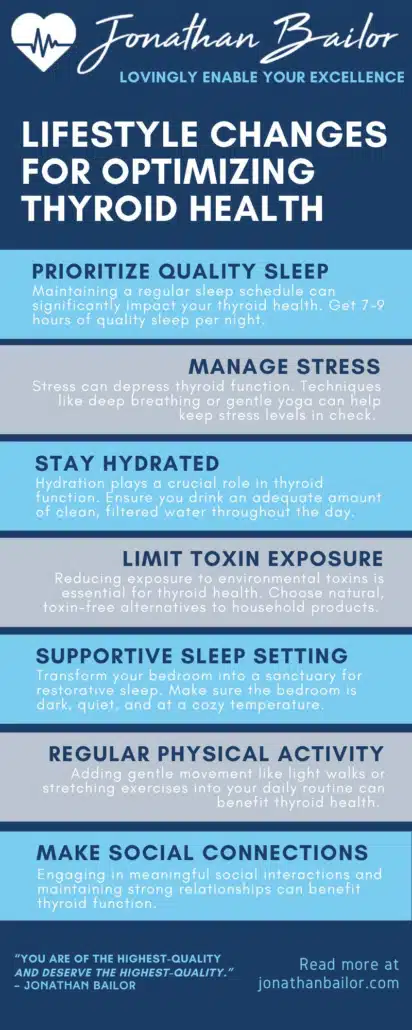
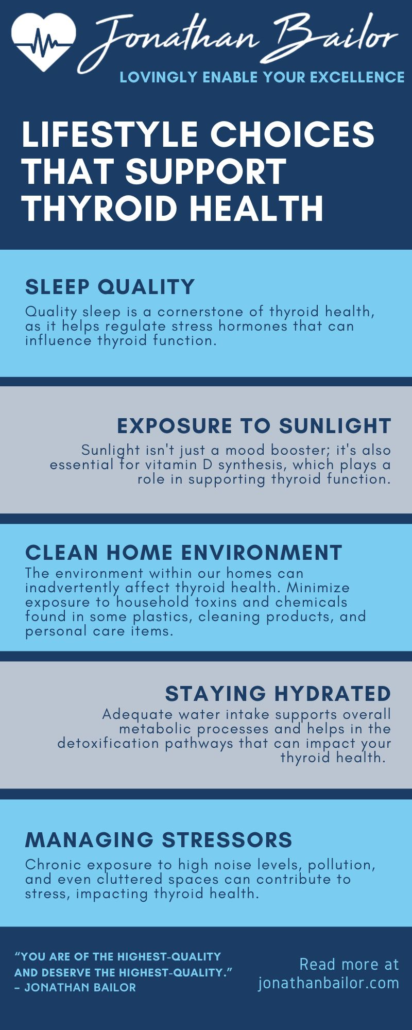
1. Prioritizing Sleep Quality
The significance of a good night’s sleep extends far beyond feeling rested. Quality sleep is a cornerstone of thyroid health, as it helps regulate stress hormones that can influence thyroid function. Aim for 7-8 hours of uninterrupted sleep in a dark, quiet environment.
Consider establishing a calming bedtime routine and maintaining a consistent sleep schedule, even on weekends, to support your body’s natural rhythms.
2. Mindful Exposure to Sunlight
Sunlight isn’t just a mood booster; it’s also essential for vitamin D synthesis, which plays a role in supporting thyroid function. Aim for 10-15 minutes of sun exposure a few times a week, preferably in the early morning or late afternoon when the sun is less intense.
However, it’s important to balance sun exposure with skin health, so don’t hesitate to use sunscreen after these brief periods.
3. Optimizing Home Environment
The environment within our homes can inadvertently affect thyroid health. Minimize exposure to household toxins and chemicals found in some plastics, cleaning products, and personal care items.
Opting for natural, unscented products can reduce the burden of these endocrine disruptors on your thyroid gland.
4. Staying Hydrated
Hydration plays a subtle yet crucial role in maintaining optimal thyroid function. Adequate water intake supports overall metabolic processes and helps in the detoxification pathways that can impact thyroid health.
Aim to drink filtered water throughout the day, keeping in mind that your individual needs may vary based on factors like climate and overall health.
5. Managing Environmental Stressors
Chronic exposure to high noise levels, pollution, and even cluttered spaces can contribute to stress, impacting thyroid health.
While it’s impossible to eliminate all environmental stressors, taking steps to create a peaceful, clean, and organized living space can contribute to overall well-being and thyroid health.
Incorporating these lifestyle changes can be a seamless yet effective way to support your thyroid. While they might seem simple, their cumulative effect over time can be profound, offering a supportive foundation for your thyroid and overall well-being.
Feeling Better Is Priceless, That's Why We Don't Put A Price On It!
“It’s Like A Free and Medically Valid Version of Noom and Weight Watchers Online”
~ Dr. Doctor Matthew Oleshiak, MD
Click the 'LEARN MORE' button below for free lifetime access to the fast fix program developed by Jonathan and top Ivy League Medical Doctors
LEARN MOREP.S. It's not a free trial. It's not part of the program for free. The entire program is free, forever, for real! No credit card needed.
Enhancing Thyroid Health Through Dietary Choices
When focusing on thyroid health, the role of diet is undeniably significant. The foods we consume can nourish or hinder this vital gland’s functionality, affecting thyroid hormone levels. Understanding which foods to embrace and which to limit can be a key strategy for maintaining a healthy thyroid.
This section highlights a series of dietary adjustments that are not only manageable but can also have a substantial impact on thyroid well-being. These suggestions are designed to integrate effortlessly into daily eating habits, making thyroid care a natural part of one’s dietary routine.
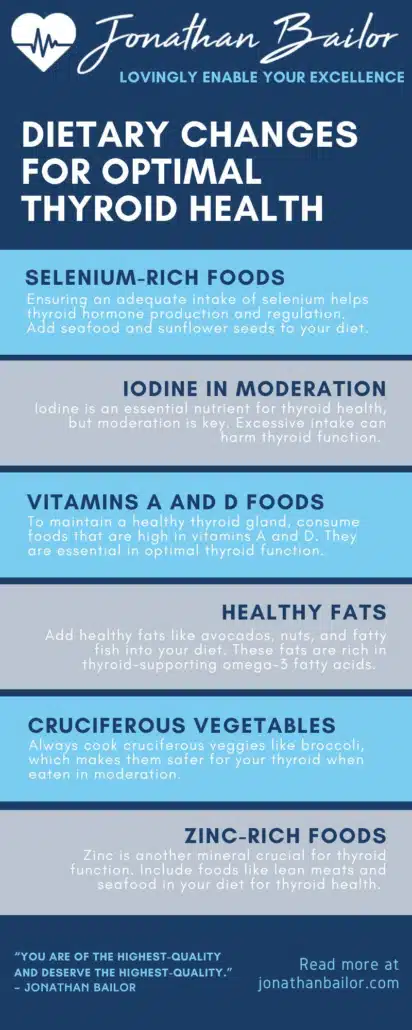
1. Incorporate Selenium-Rich Foods
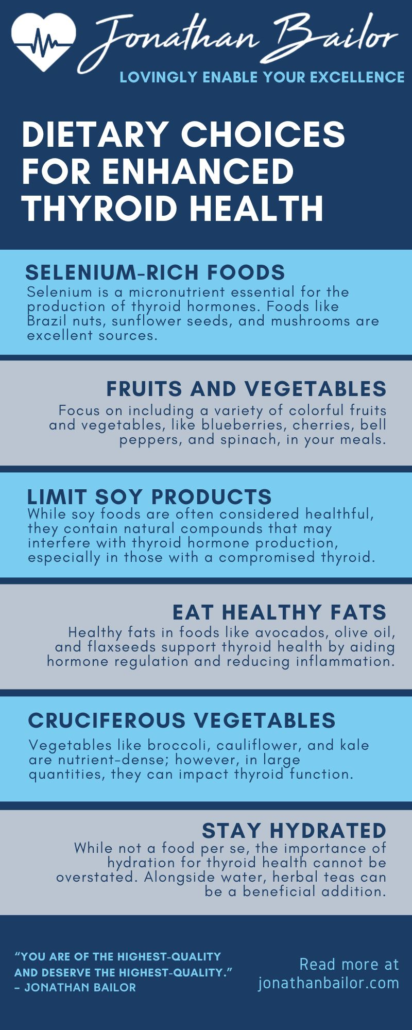
Selenium is a micronutrient essential for the production of thyroid hormones. Foods like Brazil nuts, sunflower seeds, and mushrooms are excellent sources.
Integrating a small handful of Brazil nuts or other selenium-rich foods into your daily diet can maintain the balance and production of thyroid hormones.
2. Increase Intake of Antioxidant-Rich Fruits and Vegetables
Antioxidants play a role in protecting thyroid cells from damage. Focus on including a variety of colorful fruits and vegetables, like blueberries, cherries, bell peppers, and spinach, in your meals. These foods not only support thyroid health but also contribute to overall vitality.
3. Limit Soy Products
While soy foods are often considered healthful, they contain natural compounds that may interfere with thyroid hormone production, especially in those with a compromised thyroid.
Moderation is key; it’s advisable to consume soy products in limited quantities and opt for fermented soy varieties like tempeh or miso, which are generally considered more beneficial.
4. Opt for Healthy Fats
Healthy fats in foods like avocados, olive oil, and flaxseeds support thyroid health by aiding hormone regulation and reducing inflammation. Incorporating these fats into your diet can enhance thyroid function and overall health.
5. Moderate Consumption of Cruciferous Vegetables
Vegetables like broccoli, cauliflower, and kale are nutrient-dense; however, in large quantities, they can impact thyroid function. These vegetables are healthiest when consumed cooked and in moderation, especially for those with thyroid issues.
6. Stay Hydrated with Balanced Fluids.
While not a food per se, the importance of hydration for thyroid health cannot be overstated. Alongside water, herbal teas can be a beneficial addition. Opt for herbal blends that support thyroid health, like those containing nettle or ginger.
By thoughtfully adjusting your diet with these suggestions, you can support your thyroid health in a meaningful way.
Remember, these changes are not just about restriction but about creating a balanced and nourishing diet that supports your thyroid and overall wellness.
Supporting Thyroid Health Through Physical Activity
In the realm of enhancing thyroid health, the role of physical activity is often underrated. Regular, well-chosen exercises can significantly benefit thyroid function, aiding hormone regulation and overall metabolic health.
This section focuses on a series of activity and exercise changes that are specifically beneficial for thyroid health. These activities are designed to be easily integrated into daily routines, offering a practical approach to supporting thyroid function through movement.
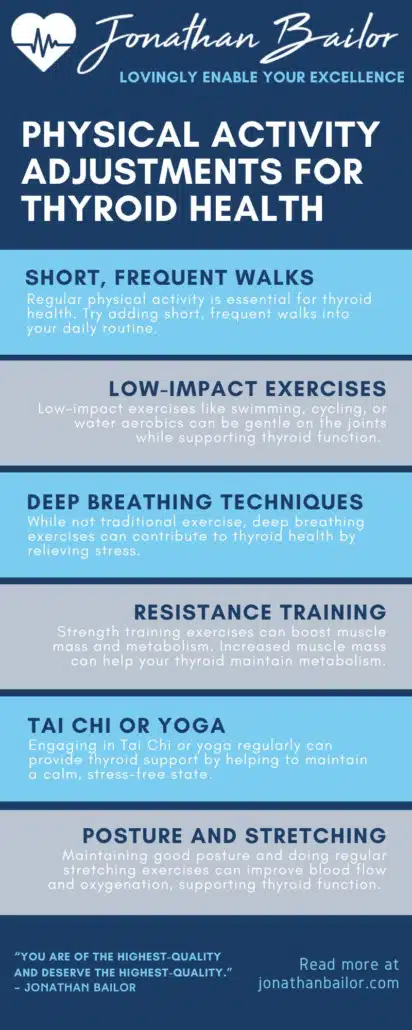
1. Gentle Cardiovascular Exercises
Activities like brisk walking, cycling, or swimming, done at a moderate pace, can boost circulation and overall metabolic rate, which in turn supports thyroid function. Aim for 30 minutes of such cardiovascular activities most days of the week.
This approach is not about intensity but consistency and enjoyment, making it sustainable in the long term.
2. Yoga and Stretching
Yoga, known for its balancing and restorative properties, can particularly benefit the thyroid. Specific poses, like the shoulder stand or fish pose, are believed to stimulate the thyroid gland.
Incorporating a yoga routine a few times a week can not only support thyroid health but also enhance flexibility and reduce stress.
3. Strength Training
Building muscle through strength training exercises can improve metabolic rate and support thyroid function. Focus on moderate, full-body strength training routines involving major muscle groups.
This doesn’t necessarily mean lifting heavy weights; bodyweight exercises or light resistance training can be just as effective.
4. Breathing Exercises
While not traditionally considered physical activity, deep breathing exercises can play a crucial role in thyroid health by reducing stress and improving oxygenation of the body.
Practices like diaphragmatic breathing or guided breathwork sessions can be easily done at home and integrated into daily routines.
5. Outdoor Activities
Engaging in outdoor activities like hiking, gardening, or even a leisurely stroll in nature can have a dual benefit.
It combines gentle physical exercise with the therapeutic effects of being in nature, which together support thyroid health.
Incorporating these physical activities into daily life can be a gentle yet effective way to support and enhance thyroid health. It’s about finding balance and enjoyment in movement, making exercise a nourishing rather than a taxing part of life.

Cultivating Thyroid Health Through Mental and Spiritual Wellness
The connection between mental and spiritual wellness and thyroid health is a tapestry woven with intricate threads. Mental and emotional states can significantly impact physical health, including the functionality of the thyroid gland.
Embracing practices that foster mental and spiritual balance can be instrumental in supporting thyroid health. This section explores the mental and spiritual practices tailored explicitly to nurturing thyroid well-being, highlighting their importance in a comprehensive approach to health.
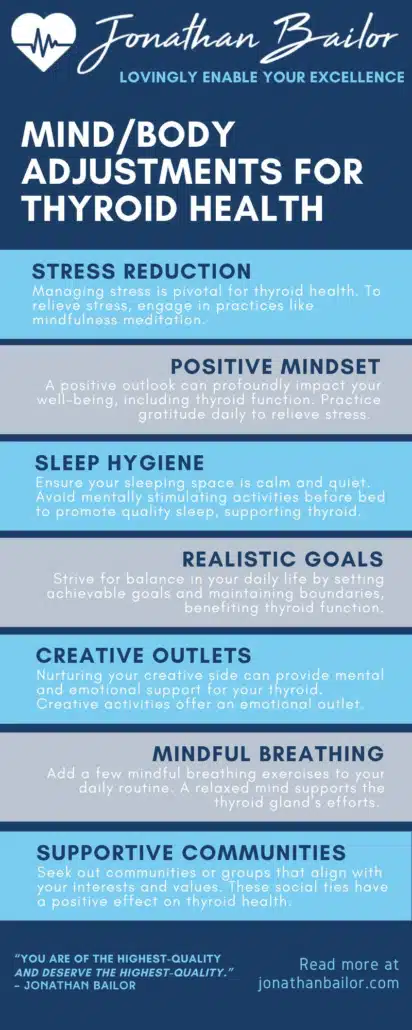
1. Mindful Meditation
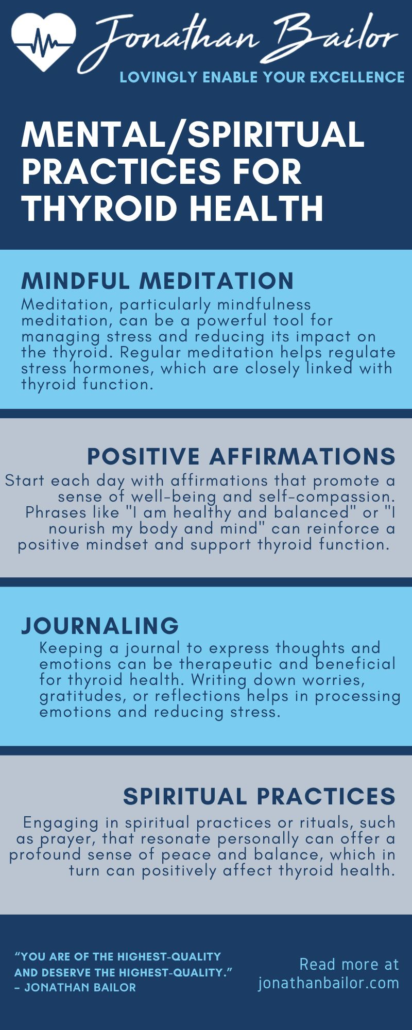
Meditation, particularly mindfulness meditation, can be a powerful tool for managing stress and reducing its impact on the thyroid. Regular meditation helps regulate stress hormones, which are closely linked with thyroid function.
Dedicate a few minutes each day to meditation, focusing on deep breathing and present-moment awareness to create a sense of calm and balance.
2. Positive Affirmations
The power of positive thinking and affirmations can influence the body’s stress response, thereby supporting thyroid health.
Start each day with affirmations that promote a sense of well-being and self-compassion. Phrases like “I am healthy and balanced” or “I nourish my body and mind” can reinforce a positive mindset.
3. Journaling for Emotional Balance
Keeping a journal to express thoughts and emotions can be therapeutic and beneficial for thyroid health. Writing down worries, gratitudes, or reflections helps in processing emotions and reducing stress.
Maintaining a regular journaling routine allows a safe space for emotional expression and introspection.
4. Spiritual Practices or Rituals
Engaging in spiritual practices or rituals that resonate personally can offer a profound sense of peace and balance, which in turn can positively affect thyroid health.
This might include prayer, attending religious services, reading spiritual texts, or other rituals that foster a connection to a higher sense of purpose and well-being.
Incorporating these mental and spiritual practices into daily life can offer a supportive foundation for thyroid health.
They are not just practices but pathways to inner peace and hormonal balance, highlighting the deep connection between our mental and spiritual states and physical health.
Thyroid Health: Answers to Your Frequently Asked Questions
Navigating the realm of thyroid health can often bring up a myriad of questions. Understanding the thyroid’s role and how to care for it is crucial for overall well-being. This section aims to answer some of the most commonly asked questions about thyroid health, providing clear and accurate information to demystify this vital aspect of our health.
Q1: What is the thyroid gland, and what does it do?
The thyroid is a butterfly-shaped gland in the neck, just below the Adam’s apple. It plays a vital role in regulating metabolism, which is the process by which your body converts what you eat and drink into energy.
The thyroid produces hormones, primarily thyroxine (T4) and triiodothyronine (T3), which impact nearly every organ in your body, influencing energy levels, heart rate, immune system, blood pressure, and even how warm or cold you feel.
If it doesn’t produce enough thyroid hormones, a condition called hypothyroidism or underactive thyroid disease occurs, which can cause weight gain or the inability to lose weight.
Q2: How do I know if my thyroid is functioning properly?
Indicators of a malfunctioning thyroid can vary. Hypothyroidism, or an underactive thyroid, may present symptoms such as fatigue, weight gain, cold intolerance, and dry skin. Hyperthyroidism, an overactive thyroid, can cause weight loss, rapid heartbeat, increased appetite, and anxiety.
Blood tests measuring levels of thyroid hormones and thyroid-stimulating hormone (TSH) are the most reliable way to assess thyroid function.
Q3: Can diet impact thyroid health?
Yes, diet plays a significant role in thyroid health. Nutrients like iodine, selenium, and zinc are essential for thyroid hormone production and metabolism. However, it’s important to strike a balance, as excessive intake of certain foods, like soy and raw cruciferous vegetables, may affect thyroid function.
A well-balanced diet, rich in a variety of nutrients, supports overall thyroid health.
Q4: What lifestyle factors can influence thyroid health?
Several lifestyle factors can impact thyroid health. Chronic stress can disrupt thyroid function and hormone levels. Environmental factors, such as exposure to certain chemicals and pollutants, can also affect the thyroid.
Additionally, maintaining a healthy weight and avoiding smoking can positively influence thyroid health.
Q5: Is thyroid disease or dysfunction more common in certain groups of people?
A thyroid disorder can affect anyone but is more common in women and older adults. Certain conditions, like autoimmune diseases, a family history of thyroid issues, and previous thyroid surgery or radiation therapy, can increase the risk of developing thyroid disorders.
Regular check-ups and awareness of family history are important for early detection and management.
Understanding thyroid health is essential to maintaining overall well-being. If you suspect any issues with your thyroid, it’s important to consult a healthcare professional for proper diagnosis and treatment.
Embracing Thyroid Health Together
In closing, supporting thyroid health is a journey that intertwines with various aspects of our lives, from the food we eat to the way we move and find mental balance. As we navigate this path, sharing our discoveries and insights can be invaluable. By passing on this knowledge, we create a ripple effect of well-being within our communities.
If you found these insights enlightening, consider sharing them with friends and family across social media platforms and via email. Together, let’s foster a community that’s informed, caring, and proactive about thyroid health and overall well-being.
Feeling Better Is Priceless, That's Why We Don't Put A Price On It!
“It’s Like A Free and Medically Valid Version of Noom and Weight Watchers Online”
~ Dr. Doctor Matthew Oleshiak, MD
Click the 'LEARN MORE' button below for free lifetime access to the fast fix program developed by Jonathan and top Ivy League Medical Doctors
LEARN MOREP.S. It's not a free trial. It's not part of the program for free. The entire program is free, forever, for real! No credit card needed.